2026 Ford F-Series: What Drive Train Do These Pickups Use?
The Ford F-Series uses a modern drivetrain system engineered to transfer engine power efficiently to the wheels while supporting towing capability, payload management, traction control, and varying terrain conditions. Full-size pickup trucks require drivetrain architectures capable of handling high torque loads, changing road surfaces, and heavy-duty operating demands. The drivetrain system in the Ford F-Series […]
The Ford F-Series uses a modern drivetrain system engineered to transfer engine power efficiently to the wheels while supporting towing capability, payload management, traction control, and varying terrain conditions. Full-size pickup trucks require drivetrain architectures capable of handling high torque loads, changing road surfaces, and heavy-duty operating demands.
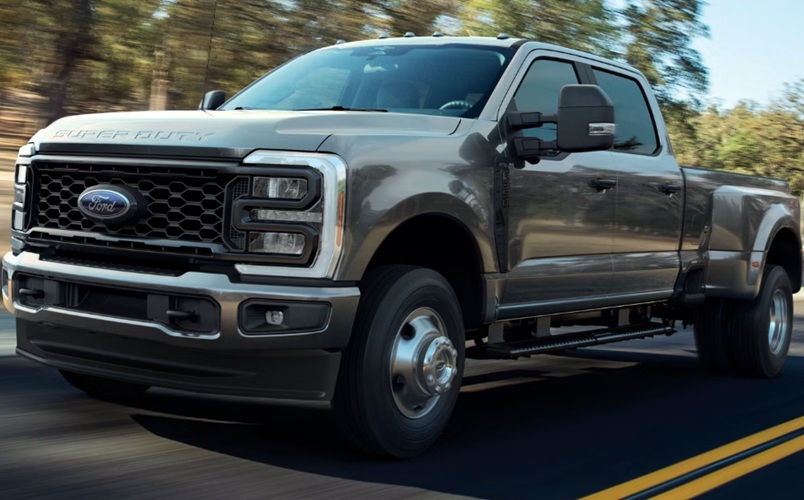
The drivetrain system in the Ford F-Series integrates the engine, transmission, transfer case, driveshafts, differentials, axle assemblies, electronic traction-management systems, and four-wheel-drive technologies. These components work together to deliver controlled power distribution, improved durability, and adaptable vehicle performance across multiple driving environments.
2026 Ford F-Series Drivetrain System
The drivetrain in the Ford F-Series transfers engine-generated torque to the wheels while managing traction, load distribution, and drivetrain efficiency.
Modern drivetrain systems must balance several engineering priorities simultaneously, including:
- towing capability
- traction management
- fuel efficiency
- durability
- off-road performance
- load-bearing stability
The drivetrain architecture varies according to engine type, axle configuration, and drivetrain selection.
Main Drivetrain Components
The primary drivetrain components include:
- engine
- transmission
- transfer case
- driveshafts
- front and rear differentials
- axle assemblies
- wheel hubs
- traction-control systems
- electronic control modules
These systems operate together to distribute torque under changing driving conditions.
Rear-Wheel-Drive Architecture
The Ford F-Series primarily uses a rear-wheel-drive-based drivetrain layout.
Power Delivery Configuration
In a rear-wheel-drive system:
- the engine generates rotational torque
- the transmission adjusts torque output through gear ratios
- torque transfers through the driveshaft
- the rear differential distributes torque to the rear wheels
This layout separates steering and propulsion duties between the front and rear axles.
Advantages of Rear-Wheel Drive
Rear-wheel-drive configurations improve:
- towing stability
- load distribution
- drivetrain durability
- traction under payload conditions
- steering precision during heavy hauling
Rear-wheel-drive systems are commonly used in full-size trucks because they handle high-torque loads efficiently.
Four-Wheel-Drive System
Many Ford F-Series configurations include electronically controlled four-wheel-drive systems.
Transfer Case Operation
The transfer case distributes torque between the front and rear axles.
When four-wheel drive is activated:
- torque is transferred to both axles
- traction capability increases
- wheel-slip management improves
The transfer case may support multiple operating modes depending on vehicle configuration.
Selectable Drive Modes
Common drivetrain modes may include:
- two-wheel drive
- four-wheel high
- four-wheel low
- automatic four-wheel drive
Each mode adjusts drivetrain behaviour according to terrain and traction conditions.
Electronic Four-Wheel-Drive Control
Modern four-wheel-drive systems are electronically managed.
Electronic Actuation
Electronic actuators engage drivetrain components according to driver input and system calibration.
The drivetrain control module monitors:
- wheel speed
- throttle position
- steering angle
- traction conditions
- drivetrain load
This allows rapid torque redistribution during changing driving conditions.
Automatic Torque Distribution
Automatic four-wheel-drive systems may engage the front axle when wheel slip is detected.
This improves traction on:
- wet pavement
- snow-covered roads
- gravel surfaces
- loose terrain
Electronic coordination improves drivetrain responsiveness and stability.
Transmission Integration
The drivetrain works closely with the transmission system.
Automatic Transmission Function
The automatic transmission adjusts torque delivery through multiple gear ratios.
Transmission functions include:
- torque multiplication
- gear reduction
- load management
- engine-speed regulation
Gear selection changes according to:
- throttle demand
- towing load
- vehicle speed
- terrain conditions
Torque Converter Operation
Automatic transmissions use torque converters to transfer engine torque hydraulically.
Torque converters improve:
- launch smoothness
- low-speed drivability
- towing capability
- drivetrain flexibility
Modern torque converters may also include lockup functions to improve efficiency during highway operation.
Driveshaft Design
Driveshafts transfer rotational torque between drivetrain components.
Rear Driveshaft Operation
In rear-wheel-drive configurations, the driveshaft transfers torque from the transmission or transfer case to the rear differential.
The driveshaft must tolerate:
- rotational stress
- vibration
- torsional load
- suspension movement
Universal Joints and Slip Yokes
Driveshaft assemblies use universal joints and slip yokes to accommodate:
- suspension articulation
- axle movement
- drivetrain alignment changes
These components maintain torque transfer while allowing mechanical flexibility.
Differential Systems
Differentials distribute torque between wheels on the same axle.
Open Differential Function
An open differential allows wheels to rotate at different speeds during cornering.
This is necessary because the inside and outside wheels travel different distances while turning.
Limited-Slip and Locking Differentials
Certain F-Series configurations may use:
- limited-slip differentials
- electronically locking differentials
These systems improve traction by limiting excessive wheel slip during low-traction conditions.
Locking differentials may improve performance on:
- mud
- snow
- uneven terrain
- off-road surfaces
Axle Assemblies
Axles transfer torque from the differentials to the wheels.
Solid Rear Axle Design
Many F-Series models use heavy-duty solid rear axles designed for high load capacity and towing durability.
Solid axles improve:
- payload support
- structural durability
- torque handling capability
- towing stability
Front Axle Systems
Four-wheel-drive models use front axle assemblies integrated with the transfer case and front differential.
Front axle components must accommodate:
- steering movement
- suspension articulation
- torque transfer
These systems are engineered for durability under varying terrain conditions.
Traction-Control Integration
The drivetrain works together with electronic traction-management systems.
Wheel Slip Detection
Traction-control systems monitor wheel-speed differences to detect wheel slip.
If wheel spin occurs, the system may:
- reduce engine torque
- apply braking force selectively
- redistribute drivetrain torque
This improves traction stability under low-grip conditions.
Electronic Stability Coordination
The drivetrain communicates with:
- anti-lock braking systems
- electronic stability control
- terrain-management systems
Integrated vehicle-dynamics control improves handling stability and traction consistency.
Drive Mode Management
The Ford F-Series may include selectable drive modes calibrated for different operating environments.
Terrain-Specific Calibration
Drive modes may adjust:
- throttle response
- transmission shift patterns
- traction-control sensitivity
- four-wheel-drive engagement
- differential operation
These calibrations improve vehicle adaptability.
Towing and Hauling Modes
Tow-oriented drive modes may optimize:
- transmission cooling
- gear selection
- engine braking
- throttle modulation
These functions help maintain drivetrain stability under heavy loads.
Off-Road Drivetrain Engineering
Certain F-Series configurations are engineered for off-road operation.
Low-Range Gear Reduction
Four-wheel-low mode uses additional gear reduction inside the transfer case.
This increases torque multiplication for:
- steep inclines
- rock crawling
- deep mud
- loose terrain
Low-range operation improves low-speed control and traction.
Drivetrain Protection
Off-road drivetrain systems may include:
- reinforced skid protection
- sealed drivetrain components
- heavy-duty differentials
- enhanced cooling systems
These features improve durability under demanding operating conditions.
Hybrid and Electrified Drivetrain Variants
Some F-Series configurations may include hybrid-assisted drivetrain systems.
Hybrid Power Integration
Hybrid drivetrains combine internal-combustion engines with electric motor assistance.
These systems may improve:
- low-speed torque delivery
- fuel efficiency
- regenerative energy recovery
- drivetrain responsiveness
Electronic Power Coordination
Hybrid drivetrain systems coordinate:
- engine torque output
- electric motor assistance
- battery management
- regenerative braking functions
Electronic management software balances performance and efficiency.
Drivetrain Cooling and Lubrication
The drivetrain requires thermal management and lubrication for durability.
Differential and Transmission Cooling
High drivetrain loads generate heat within:
- transmissions
- transfer cases
- axle assemblies
- differentials
Cooling systems and lubricants help stabilize operating temperatures.
Lubrication Systems
Gear oils and transmission fluids reduce:
- friction
- wear
- thermal stress
- component fatigue
Lubrication chemistry is calibrated for heavy-load and towing operation.
Electronic Drivetrain Monitoring
Modern drivetrain systems are continuously monitored electronically.
Sensor-Based Monitoring
The drivetrain control system monitors:
- wheel speed
- transfer-case operation
- transmission temperature
- differential performance
- traction conditions
Electronic monitoring improves drivetrain calibration and fault detection.
Diagnostic Functions
Potential monitored conditions include:
- drivetrain overheating
- transfer-case faults
- sensor irregularities
- traction-control malfunctions
- differential-lock operation issues
Drivetrain Maintenance
Drivetrain systems require periodic inspection and maintenance.
Common Inspection Areas
Routine drivetrain inspections may include:
- driveshaft inspection
- differential-fluid evaluation
- transfer-case fluid checks
- axle-component inspection
- transmission-fluid diagnostics
- universal-joint inspection
Proper lubrication is essential for drivetrain durability.
Long-Term Durability
Drivetrain components experience repeated:
- torque loading
- thermal cycling
- vibration exposure
- suspension articulation
Periodic maintenance helps maintain performance and reduce long-term wear.
AM Ford may also inspect drivetrain software calibration and electronic traction-management systems during scheduled maintenance procedures.
2026 Ford F-Series FAQ
What type of drivetrain does the 2026 Ford F-Series use?
This pickup truck uses a rear-wheel-drive-based drivetrain with available electronically controlled four-wheel-drive systems, automatic transmissions, and heavy-duty axle assemblies.
Does the Ford F-Series offer four-wheel drive?
Yes. Many configurations include selectable four-wheel-drive systems with electronically controlled transfer cases and multiple drive modes.
What is the purpose of the transfer case?
The transfer case distributes engine torque between the front and rear axles when four-wheel drive is engaged.
Does the drivetrain include locking differentials?
Certain F-Series configurations may include limited-slip or electronically locking differentials designed to improve traction on low-grip surfaces.
How does the drivetrain support towing performance?
The drivetrain uses heavy-duty axles, torque-management systems, transmission calibration, and traction-control integration to improve towing stability and load-handling capability.
Disclaimer: Content contained in this post is for informational purposes only and may include features and options from US or internacional models. Please contact the dealership for more information or to confirm vehicle, feature availability.