
What Service Should You Do In Winter for 2026 Ford Vehicles?
Winter conditions place additional stress on vehicle systems. Low temperatures, snow, road salt, and ice affect batteries, fluids, tires, brakes, and visibility components. Proper seasonal service helps maintain safety, reliability, and performance. Battery Inspection and Test for Ford Vehicles Cold temperatures reduce battery capacity. Engine oil thickens at low temperatures, increasing the starting load. A […]
Winter conditions place additional stress on vehicle systems. Low temperatures, snow, road salt, and ice affect batteries, fluids, tires, brakes, and visibility components. Proper seasonal service helps maintain safety, reliability, and performance.
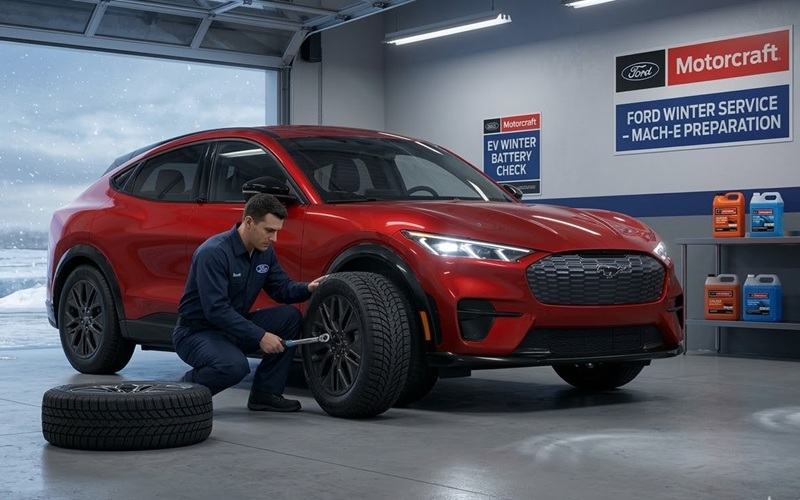
Battery Inspection and Test for Ford Vehicles
Cold temperatures reduce battery capacity. Engine oil thickens at low temperatures, increasing the starting load. A weak battery may fail during winter.
Battery Service Checklist
- Test battery voltage and cold cranking performance
- Inspect battery terminals for corrosion
- Check battery cables for secure connection
- Confirm battery age
Modern Ford vehicles use absorbed glass mat (AGM) or conventional lead-acid batteries, depending on model and equipment. Hybrid and electric models include additional high-voltage battery systems, but the 12-volt battery remains essential for system startup.
Battery testing identifies reduced capacity before failure occurs.
Engine Oil and Filter Service
Engine oil thickens at low temperatures. Using the correct viscosity is critical during winter.
Oil Service Points
- Confirm oil meets Ford specification
- Use recommended viscosity grade
- Replace oil filter if service interval applies
Many Ford vehicles use synthetic oil that maintains flow characteristics in cold weather. Oil change intervals follow manufacturer guidelines based on driving conditions and engine type.
Cooling System Inspection
The cooling system protects the engine from freezing and overheating.
Coolant Service Checklist
- Check coolant level
- Test freeze protection concentration
- Inspect hoses for cracks
- Inspect radiator and cap
Coolant contains antifreeze that prevents freezing at sub-zero temperatures. Proper mixture ensures protection and corrosion resistance.
Tire Inspection and Pressure Check
Tire pressure decreases as the temperature drops. Underinflated tires affect traction and braking.
Tire Service Points
- Check tire pressure when cold
- Adjust to the recommended specification
- Inspect tread depth
- Inspect for sidewall damage
Winter tires improve traction on snow and ice. All-season tires may not provide the same level of cold-weather grip.
Tread depth affects stopping distance and control.
Brake System Inspection
Winter moisture and road salt accelerate corrosion in brake components.
Brake Inspection Items
- Inspect brake pads and rotors
- Check brake fluid level
- Inspect brake lines
- Confirm the parking brake operation
Brake system performance is critical during slippery conditions.
Brake fluid absorbs moisture over time. Excess moisture lowers the boiling point and may affect performance.
Windshield Wiper and Washer System Service
Snow and salt reduce visibility.
Visibility System Checklist
- Replace worn wiper blades
- Fill the washer fluid with a winter-rated solution
- Check washer nozzles
- Inspect defroster operation
Winter washer fluid resists freezing and helps remove road salt residue.
Clear visibility supports safe winter driving.
Heating and Climate System Inspection
Cabin heating depends on proper coolant circulation and blower function.
HVAC Inspection Points
- Confirm heater output
- Check the cabin air filter condition
- Test blower motor operation
- Inspect rear defroster function
A clean cabin air filter supports airflow and defrost efficiency.
All-Wheel Drive and Four-Wheel Drive System Check
Many Ford SUVs and trucks include all-wheel drive (AWD) or four-wheel drive (4WD).
Drivetrain Service Items
- Inspect the transfer case fluid level if applicable
- Inspect the differential fluid condition
- Check driveshaft components
- Confirm system operation
Cold weather places additional load on drivetrain components during low-traction operation.
Models such as the F-150, Super Duty, Explorer, and Bronco include drivetrain systems that benefit from seasonal inspection.
Suspension and Steering Inspection
Winter road conditions include potholes and uneven surfaces.
Suspension Service Checklist
- Inspect shock absorbers or struts
- Check control arms and bushings
- Inspect steering components
- Confirm wheel alignment
Proper suspension condition supports stable handling on snow-covered roads.
Exhaust System Inspection
Exhaust components face exposure to moisture and road salt.
Exhaust Inspection Points
- Check for corrosion
- Inspect hangers and mounts
- Listen for leaks
Short winter trips increase condensation inside the exhaust system, which may accelerate corrosion.
Underbody Cleaning and Corrosion Protection
Road salt accelerates rust formation.
Underbody Service Measures
- Wash the underbody periodically
- Inspect frame and subframe components
- Check brake and fuel lines
Routine cleaning reduces the risk of corrosion during the winter months.
Hybrid and Electric Model Considerations
Hybrid and electric Ford vehicles require additional seasonal attention.
Hybrid and Electric Service Points
- Inspect the 12-volt battery condition
- Confirm charging system operation
- Inspect the high-voltage cooling system
Cold temperatures reduce electric battery efficiency. Regular inspection ensures system readiness.
Lighting System Inspection
Winter days have reduced daylight hours.
Lighting Service Checklist
- Check headlamp operation
- Inspect tail lamps
- Confirm brake light function
- Clean lenses
Snow and salt can block light output. Clean lenses improve visibility to other drivers.
Scheduled Maintenance Review
Winter service should align with manufacturer maintenance intervals.
Maintenance Review Points
- Confirm mileage-based service
- Review the maintenance reminder system
- Address any warning indicators
Emergency Equipment and Software Updates
Modern Ford vehicles include electronic driver-assistance systems.
Additional Winter Checks
- Confirm software updates are current
- Inspect sensors and cameras for obstruction
- Check the spare tire condition
- Inspect the tire repair kit if equipped
Driver-assistance systems rely on clean sensors to function properly.
Summary of Winter Service Priorities
Winter service for Ford vehicles includes attention to:
- Battery condition
- Engine oil and coolant
- Tire pressure and tread
- Brake system inspection
- Heating and defrost function
- AWD or 4WD system inspection
- Underbody cleaning
- Lighting system operation
Cold temperatures, moisture, and road salt increase mechanical stress. Regular inspection and maintenance help maintain vehicle reliability and safety throughout the winter season.
Ford Vehicles: Questions and Answers
Why is battery testing important in winter?
- Cold temperatures reduce battery capacity and increase engine starting load.
What happens to tire pressure in low temperatures?
- Tire pressure decreases as the temperature drops.
Why should coolant concentration be tested?
- Proper coolant mixture prevents freezing and protects against corrosion.
What type of washer fluid is recommended for winter?
- Winter-rated washer fluid that resists freezing is recommended.
Why is underbody cleaning important during winter?
- Road salt accelerates corrosion on frame, brake, and fuel system components.
Disclaimer: Content contained in this post is for informational purposes only and may include features and options from US or internacional models. Please contact the dealership for more information or to confirm vehicle, feature availability.